
Mechanically Stable and Tunable Photoactivated Peptide-Based Hydrogels for Soft Tissue Adhesion
Journal: Advanced Functional Materials
Authors: German Andres Mercado - Alex Ross, Daniel Nguyen, Aidan J. MacAdam, German A. Mercado Salazar, Micaela Gianetti, Ramis Ileri, Marc Ruel, Erik J. Suuronen, Emilio I. Alarcon
Compared to the use of natural-based products, peptide-based materials can be produced synthetically to reduce cost, batch variability, and avoid pathogen transmission while providing flexible platforms with suitable tissue and cell compatibilities for biomedical uses. In this study, we present a rationally designed, collagen-like peptide (CLP) hydrogel platform utilizing supramolecular self-assembly and light-triggered thiol-ene crosslinking to form mechanically stable and tunable materials for use as soft tissue adhesives. By screening and characterizing a library of synthetic peptides, ideal candidates for hydrogel formation are identified. Upon adjusting the peptide concentration or structural properties such as junction functionality and choice of reactive group, the mechanical properties of these peptide hydrogels can be optimized to generate robust biomaterials capable of closing wounds with strength comparable to commercial tissue adhesives such as LiquiBand. These peptide materials are also cytocompatible and biodegradable, indicating their potential as adhesives for soft tissue repair.
Year: 2025
German Andres Mercado
Contact Information

- University of Ottawa
Department of tacomeau@gmail.com - 40 Ruskin St,
Ottawa, Ontario,
Canada K1Y 4W7 - Email: gmerc086@uottawa.ca
- Home: 613-883-3364
- Work: 613-883-3364
- Membership#C263277
Biomaterial Highlight Of The Month
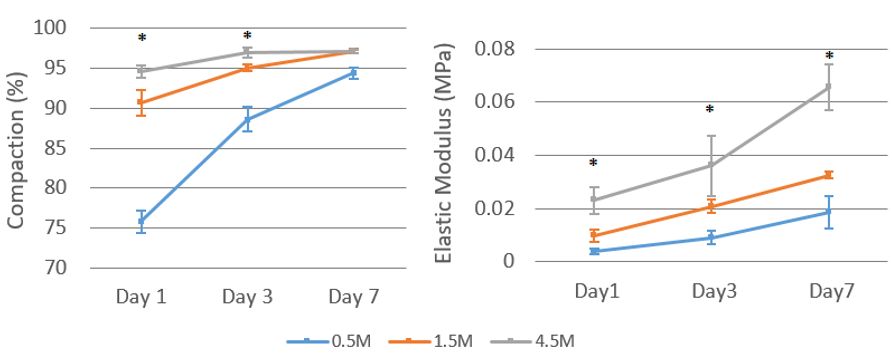
Effect of cell seeding density on the mechanical and structural maturation of collagen gel-based tubular scaffolds for vascular tissue engineering
Dimitria Camasao
Read More

